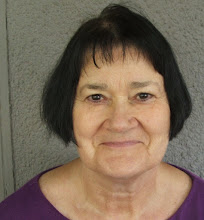
Both of the writing groups I lead met this week and I was struck both evenings by the high level of comments and compassion from the participants. Some of these writers are very good and some are are still developing basic skills. Some have been coming a long time to the group; others are relative newcomers. But their encouragement of each other and their careful listening is really inspiring.
Note that these writers belong to a writing support group and not a writing critique group. My own experiences with critique groups were so painful, I soon stopped going. I tried three and in each case, the groups seemed to run on fear and scarcity. Fear that they weren't any good and fear that there weren't publishing opportunities for everyone, and so they needed to make others feel less adequate in some way. I will admit that those experiences happened over 10 years ago and publishing has changed so much that perhaps critique groups are now less competitive. But back then, I needed support, not critique, so I arranged my own groups, where seldom is heard a discouraging word and we believe in everybody's right to write.
Here's some of what I see writing support groups offering. The opportunity to:
1. Read out loud before an appreciative audience.
2. Be heard by the same audience over time so they note your progress.
3. Ask questions about the writing process from others who are in that process. No question is too elementary to be entertained.
4. Receive encouragement no matter what your skill level is.
5. Listen to the same writers over time and note their progress.
6. Celebrate small and large writing successes with people who care about your creative expression.
7. Receive compassion and understanding when the writing isn't going well.
8. Feel safe as a creative.
Friday, March 15, 2013


Sunday, March 10, 2013
Tip #1 for a better self-published book
More and more of my editing clients are self-publishing. Yet for all of its time and money advantages, self-publishing presents additional challenges to the writer, challenges that would have otherwise been handled by the publishing house with its many resources. The next few posts are going to cover some ways to handle these challenges.
Tip #1: Use a professional cover.
Although most self-published books don't end up in brick-and-mortar bookstores where potential readers will pick them up off a crowded table, you still need a great cover. People look at the cover first thing on your amazon site and then read on. People consider the cover first if you are selling your book at a book fair or event. Readers are visual people and like all visuals, they are attracted to color and patterns. Many people buy books just because they like the cover.
In self-publishing, there are three ways to create a cover:
1. Pay a graphic designer or book cover designer to do it. Costs for this vary but $250-500 is a reasonable investment. I suggest getting a firm price from the designer that includes the initial front and back design, at least one design re-do if you don't like it, and up to two text changes. The designer should be willing to supply the cover to you in both pdf and jpg formats. Cost may increase if you do not supply ideas or the cover art. If you're short on funds, consider whether you have something you can trade the designer for their services: massage, yoga, editing, writing, home-cooked meals, etc.
2. Pay the self-publishing venue to design it for you. All self-publishing companies sell additional services in design, editing, marketing. If you're buying other services from them, it may prove more cost-efficient to have them design the cover.
3. Do it yourself. There are cover templates available and companies like amazon's CreateSpace make it very easy to do, even offering you a variety of cover images. Unless you have design experience, however, I don't recommend going this route. You'll most likely end up with an okay cover but not a great one.
If you can afford it, get a piece of original artwork for your cover.
There are thousands of artists out there with beautiful, original work. If you spend some time looking on line at art websites, you are apt to find several perfect things for your book cover. Contact the artist and find out about buying the piece or about buying the right to put the piece on your cover (with appropriate back-cover credit, of course). Many artists will be thrilled at the chance to get their work in front of a larger audience and may well be interested in a trade or a good deal.
Choose an image that intrigues the reader to enter the story.
Two of my clients wrote a very interesting book about their move from urban to rural living in the wine country of Northern California. They chose a lovely picture of themselves with their dog in a vineyard to put on the front. For those of us who know them, it's a great cover. But for someone who doesn't know them, it doesn't work well. The authors aren't celebrities and the cover doesn't invite readers to imagine themselves in the stories, in that vineyard. One option would have been to show themselves from the back with their dog. That kind of anonymity might have created a romance and mystery that would beckon the reader in. Even better would have been a painting of a landscape that invited the reader in.
Bottom line: A beautiful and intriguing cover may make all the difference between sales and no sales.
Tip #1: Use a professional cover.
Although most self-published books don't end up in brick-and-mortar bookstores where potential readers will pick them up off a crowded table, you still need a great cover. People look at the cover first thing on your amazon site and then read on. People consider the cover first if you are selling your book at a book fair or event. Readers are visual people and like all visuals, they are attracted to color and patterns. Many people buy books just because they like the cover.
In self-publishing, there are three ways to create a cover:
1. Pay a graphic designer or book cover designer to do it. Costs for this vary but $250-500 is a reasonable investment. I suggest getting a firm price from the designer that includes the initial front and back design, at least one design re-do if you don't like it, and up to two text changes. The designer should be willing to supply the cover to you in both pdf and jpg formats. Cost may increase if you do not supply ideas or the cover art. If you're short on funds, consider whether you have something you can trade the designer for their services: massage, yoga, editing, writing, home-cooked meals, etc.
2. Pay the self-publishing venue to design it for you. All self-publishing companies sell additional services in design, editing, marketing. If you're buying other services from them, it may prove more cost-efficient to have them design the cover.
3. Do it yourself. There are cover templates available and companies like amazon's CreateSpace make it very easy to do, even offering you a variety of cover images. Unless you have design experience, however, I don't recommend going this route. You'll most likely end up with an okay cover but not a great one.
If you can afford it, get a piece of original artwork for your cover.
There are thousands of artists out there with beautiful, original work. If you spend some time looking on line at art websites, you are apt to find several perfect things for your book cover. Contact the artist and find out about buying the piece or about buying the right to put the piece on your cover (with appropriate back-cover credit, of course). Many artists will be thrilled at the chance to get their work in front of a larger audience and may well be interested in a trade or a good deal.
Choose an image that intrigues the reader to enter the story.
Two of my clients wrote a very interesting book about their move from urban to rural living in the wine country of Northern California. They chose a lovely picture of themselves with their dog in a vineyard to put on the front. For those of us who know them, it's a great cover. But for someone who doesn't know them, it doesn't work well. The authors aren't celebrities and the cover doesn't invite readers to imagine themselves in the stories, in that vineyard. One option would have been to show themselves from the back with their dog. That kind of anonymity might have created a romance and mystery that would beckon the reader in. Even better would have been a painting of a landscape that invited the reader in.
Bottom line: A beautiful and intriguing cover may make all the difference between sales and no sales.
Sunday, March 3, 2013
Sitting with uncertainty
As the retreat in rural Tennessee continued, I wrote a number of poems, but nagging at me was getting started on the next novel. I went back through my writing sketch book, where I draft poems, write fictional prompts, and gather ideas, and I typed in about 8 possibilities, prompts that had a nice ring to them or an intriguing character or situation.
And then on the third morning of the retreat, I get up early, having finally adjusted to the time zone change, and I plunged in on one. For the last five days, I have written on this piece first thing. I don't know what else to call it. It isn't a short story. I know that it's way more than that. But is it a novel? Will the characters speak to me for the next year? Will I find a theme that is substantial enough to build a whole novel around?
I miss the certainty of the last novel adventures, knowing that I was on the right track from the beginning. And yet, this is just another kind of adventure, and I'm willing to take the ride.
And then on the third morning of the retreat, I get up early, having finally adjusted to the time zone change, and I plunged in on one. For the last five days, I have written on this piece first thing. I don't know what else to call it. It isn't a short story. I know that it's way more than that. But is it a novel? Will the characters speak to me for the next year? Will I find a theme that is substantial enough to build a whole novel around?
I miss the certainty of the last novel adventures, knowing that I was on the right track from the beginning. And yet, this is just another kind of adventure, and I'm willing to take the ride.
Sunday, February 24, 2013
The value of having to set an example
I've long known that when I want to learn something, offering a class in it is a good way for me to figure things out. The same is proving true of the retreat I'm currently on. Since I finished Sober Play at the first of the year, I've had trouble getting back into daily writing. And by that, I mean writing new material. I've spent plenty of time in the last two months working on my writing: I've been editing, publishing, and marketing so I'm in the writing, but I haven't been getting up early enough to spend a half hour or more writing something new--new stories, new poems, a new novel.
Part of the stuckness is around what to work on. Each time I've finished something before, I've known exactly what was coming next. I've kind of figured that was how I worked. But this time, I've got 8-10 ideas and none of them is certain. None of them says: Pick me! Pick me! And I've been hesitating and waiting for that to happen.
Now I'm leading a writing retreat in rural Tennessee outside of Nashville and I'm encouraging people to keep writing and work through blocks and just not worry what's going to come of it, and I'm having to take my own advice. So this morning I got up and made tea and went right to the computer and plunged into one of the ideas. I've had to give up the certainty and waiting and just write my way through it. And it feels good.
Part of the stuckness is around what to work on. Each time I've finished something before, I've known exactly what was coming next. I've kind of figured that was how I worked. But this time, I've got 8-10 ideas and none of them is certain. None of them says: Pick me! Pick me! And I've been hesitating and waiting for that to happen.
Now I'm leading a writing retreat in rural Tennessee outside of Nashville and I'm encouraging people to keep writing and work through blocks and just not worry what's going to come of it, and I'm having to take my own advice. So this morning I got up and made tea and went right to the computer and plunged into one of the ideas. I've had to give up the certainty and waiting and just write my way through it. And it feels good.
Friday, February 8, 2013
It's official!
Wednesday afternoon, I signed a contract with Skyhorse Publishing in New York to publish my second novel, Fog of Dead Souls. I'm really thrilled. Even my wretched experience with one of the nasty viruses going around can't dampen my enthusiasm.
There was no bidding war for my book. In fact, 56 or so editors had read it and most had really liked it, but just not enough. Too dark, said one. Not dark enough, said the next. Loved the characters but didn't like the plot, said a third. Loved the plot but didn't like the characters, said a fourth. This had gone on for 18 months, but my agent never lost her enthusiasm or her energy behind the book. "It just takes the right one," she said.
And Skyhorse is that one. As a college mate remarked, now I'm a real novelist. Actually, I started feeling like a "real" novelist, when I started Fog. I'd finished one novel and moved right on to the second. I just love writing them.
I'm excited that my book may have a chance to make it big. I'll keep you posted.
There was no bidding war for my book. In fact, 56 or so editors had read it and most had really liked it, but just not enough. Too dark, said one. Not dark enough, said the next. Loved the characters but didn't like the plot, said a third. Loved the plot but didn't like the characters, said a fourth. This had gone on for 18 months, but my agent never lost her enthusiasm or her energy behind the book. "It just takes the right one," she said.
And Skyhorse is that one. As a college mate remarked, now I'm a real novelist. Actually, I started feeling like a "real" novelist, when I started Fog. I'd finished one novel and moved right on to the second. I just love writing them.
I'm excited that my book may have a chance to make it big. I'll keep you posted.
Friday, February 1, 2013
My new books are out and available!
I'm very excited to announce the publication of two new books. The first, The Color of Longing, is a novel I completed in 2009. I had had such a good time writing it that I immediately moved on to writing a second novel (the one that is in negotiation with the publisher in New York). Then last summer I decided I would self-publish Longing, just get it out there and see what can happen. It took me a while to edit it, get it proofread, make some changes, proofread again. But mostly I couldn't seem to paint the image that I had in mind for the cover. Then in November, that happened and I moved ahead.
Here's a brief synopsis:
What’s a guy to do when the woman he’s loved for 15 years asks for help leaving her alcoholic husband? And what if that husband is his best friend? In this unconventional romance, artist Jake Logan makes a painful and inevitable choice that sets him adrift. Crisscrossing the country with his cat Sadie, he seeks answers to his quest from several helpful strangers, but it isn’t until he has a deep spiritual encounter with himself that he begins to find his true way home.


The second book is a how-to book called Sober Play: Using Creativity for a More Joyful Recovery. It promotes using creative self-expression in any number of forms and media to have a more joyful life. This has long been an important part of my own recovery from alcoholism and I wanted to share all I've learned and all I believe about the connection between creativity and recovery.
Both books are available on amazon and kindle and through me at jill@jillkellyauthor.com. If you read one or the other and like it, I hope you'll review the book on amazon for me. Happy reading!
Here's a brief synopsis:
What’s a guy to do when the woman he’s loved for 15 years asks for help leaving her alcoholic husband? And what if that husband is his best friend? In this unconventional romance, artist Jake Logan makes a painful and inevitable choice that sets him adrift. Crisscrossing the country with his cat Sadie, he seeks answers to his quest from several helpful strangers, but it isn’t until he has a deep spiritual encounter with himself that he begins to find his true way home.


The second book is a how-to book called Sober Play: Using Creativity for a More Joyful Recovery. It promotes using creative self-expression in any number of forms and media to have a more joyful life. This has long been an important part of my own recovery from alcoholism and I wanted to share all I've learned and all I believe about the connection between creativity and recovery.
Both books are available on amazon and kindle and through me at jill@jillkellyauthor.com. If you read one or the other and like it, I hope you'll review the book on amazon for me. Happy reading!
Tuesday, January 29, 2013
The contract stage of traditional publishing
On my flight to Florida last week, I read the contract my agent forwarded from Skyhorse Publishing, which is interested in buying my second novel, Fog of Dead Souls. In fact, I read it twice. It was pretty accessible in language, and I made a list of about 10 questions for my agent: phrases and sentences I didn't understand and one issue I wanted to reword concerning when the rights to the book revert to me.
My great agent, Andrea Somberg, had made some revisions of her own to protect me and I agreed with all of them. Yesterday we had a good conversation and she will send our revisions on to them. She doesn't believe they'll give us all we want but we'll see. The negotiations continue.
At the same time, I'm self-publishing two books through CreateSpace, a much faster way to get things out. It's going to be interesting to compare the two processes and their results. I'll keep you posted.
My great agent, Andrea Somberg, had made some revisions of her own to protect me and I agreed with all of them. Yesterday we had a good conversation and she will send our revisions on to them. She doesn't believe they'll give us all we want but we'll see. The negotiations continue.
At the same time, I'm self-publishing two books through CreateSpace, a much faster way to get things out. It's going to be interesting to compare the two processes and their results. I'll keep you posted.
Subscribe to:
Comments (Atom)