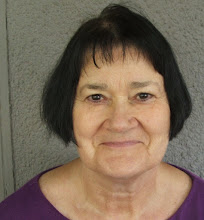
Yesterday I had lunch with a long-time client, a psychologist and trainer who has written 5 very successful books on low self-esteem. I've edited all those books. We hadn't seen each other in a while and we got caught up, including stories from her travels around the country teaching her method and selling her books, which are self-published. Then after a lull as we finished our sweet potato fries, she said, "I've haven't been writing."
I was surprised to hear this for she had told me about a year ago that she was done with writing. At that time, she'd been having fun writing a mystery novel with a psychologist detective but had become ill and felt she had to choose to do her professional work of therapy and training with the energy she had. So I hadn't asked about writing projects and didn't expect she would have any.
I asked her to tell me more. It turned out that with the return of her health, she felt too guilty about an incomplete professional writing project (a recovery version of her method) to write for fun. She had written many pages on the professional book but was overwhelmed by the task of completing it. She had plenty of material and felt confident in her writing skills. She even had time and energy. But she didn't have the right kind of time--she wanted 3-4 hours a day for as many days in a row as she could get. And she couldn't see a way to write the book because that wasn't really available to her.
I told her of my experience with finally giving up that need for my own writing and letting an hour a day or even less suffice and move me forward. I told her I still go on retreat and have long periods to write (and that she could do that too as she controls her own schedule). She listened and we talked about it a little more. I didn't push too hard. Just said that maybe with some rearranging, she could finish the last professional book by June and really be done with that part of her career. She said she'd think about it, and knowing her she will.
It is easy, I think, for those of us with creative inclinations and other work obligations to get stuck in needing the ideal with its yeah-buts and if-only's. However, if we can find a different place to come from (how happy creating makes us, how meaningful it is, how relaxing it is, what kind of a contribution to the world we can make when we are happy), then that idea has less of a grip on us and we can welcome the possible, even if it isn't perfect.
Wednesday, December 7, 2011


Saturday, December 3, 2011
Tell it as story or scene
In the novel I'm writing, I needed to include information about the death of the main character's mother. At first I included it in a transition piece (where time had passed and this was one of the things that had happened). So I created a 3-line "story" and cleverly connected it to the fact that the protagonist's child looked like the mother and the complications of that resemblance. And I was quite pleased with how it turned out.
But the event wouldn't go away. It kept returning in my consciousness, nagging at me for attention. The event itself and its circumstances weren't changing but I knew I had to make a bigger deal of Lola finding out and really put her in her reactions. I didn't analyze this. I just let it keep percolating and then it led me to a different beginning for the chapter, one that was more original and helped me show more things than just a few lines of telling it would have. I found a way to work in the scene of her learning and how she deals with it and what it says about her ability in relationships.
And then this afternoon, as I sat down to write this blog, a whole other importance fell into place and it was such a "Duh!" moment. This book centers on the difficulty of mothers and daughters. No wonder my psyche was nagging at me to make this piece a bigger deal. Glad I listened.
But the event wouldn't go away. It kept returning in my consciousness, nagging at me for attention. The event itself and its circumstances weren't changing but I knew I had to make a bigger deal of Lola finding out and really put her in her reactions. I didn't analyze this. I just let it keep percolating and then it led me to a different beginning for the chapter, one that was more original and helped me show more things than just a few lines of telling it would have. I found a way to work in the scene of her learning and how she deals with it and what it says about her ability in relationships.
And then this afternoon, as I sat down to write this blog, a whole other importance fell into place and it was such a "Duh!" moment. This book centers on the difficulty of mothers and daughters. No wonder my psyche was nagging at me to make this piece a bigger deal. Glad I listened.
Tuesday, November 29, 2011
Reading your work aloud
I have the great luxury of a hairdresser who comes to my house. Midway through the process, Cindy and I have tea and chat or I read to her from the book I'm working on. Today I read a section of dialog that I wrote about a month ago. And as I was reading it to her, I realized three things. That the dialog was pretty good (feasible, natural, well paced). Second, it goes on too long and that's because of number 3. I don't have a good enough reason for it.
I wanted this dialog to show a conflict between the roommates in the flat and I wanted to make the protagonist defend her shady boyfriend. And I realized in reading it aloud that while those two things happened, I took too long to do it. So I either need to find another plot or character point to include in that dialog or cut it short.
I don't think I would have discovered this in a silent reading of the text. However, I now realize I might have skipped over some of it in a silent read. And if the author doesn't find it interesting, yikes! How will the reader? So I pegged that for reworking.
So two bits of advice: Read your work aloud to a trusted friend and listen for your own impatience. Second, watch for places you're tempted to bypass in a silent reading. Maybe they can be shortened or eliminated all together.
I wanted this dialog to show a conflict between the roommates in the flat and I wanted to make the protagonist defend her shady boyfriend. And I realized in reading it aloud that while those two things happened, I took too long to do it. So I either need to find another plot or character point to include in that dialog or cut it short.
I don't think I would have discovered this in a silent reading of the text. However, I now realize I might have skipped over some of it in a silent read. And if the author doesn't find it interesting, yikes! How will the reader? So I pegged that for reworking.
So two bits of advice: Read your work aloud to a trusted friend and listen for your own impatience. Second, watch for places you're tempted to bypass in a silent reading. Maybe they can be shortened or eliminated all together.
Tuesday, November 22, 2011
A conversation about description
I met with a couple of writers this afternoon for a make-up session for last month's support group. Vicki had an excellent question about description. How do you know what to include and how much is enough and how much is too much? Flaubert used an encyclopedic amount, Hemingway very little. They're both considered master story tellers.
Of course, there are no simple answers to these questions, even though there are writers on writing who may try to sell you a formula. Lots of factors come into play. But there are some guidelines I use.
1. How much does description fit into your writing style? Many of us have writing styles or voices that are a reflection of how we live. Your style may be sparse in true minimalist fashion or it may be complicated and baroque in its detail. Take a look around your living space and you'll get an idea of how much detail you want to live with and write with.
2. How can description of a character or a setting assist your story? Description for description's sake almost always comes across as lame. It needs to serve a purpose. If your character is wearing a mini-skirt and a tank top to a job interview, we know a lot about her without you having to tell us. Giving your teenager girl an immaculate bedroom will go a long way to underscoring her anorexia without you having to tell us. That's right. We're back in the land of "Show, don't tell." Physical attributes can reinforce a character's personality in a few words. Even when the attribute goes against the moral grain (a thug in an Armani suit), it works without you having to tell us that he has expensive suits or is trying to hide his true nature.
3. How can description assist your scene? If I'm writing a scene that focuses on two characters breaking off their relationship, I probably don't want a lot of physical description. Instead, I'll want to describe what the point of view character is feeling and how she's responding to her lover. I'll want to focus on emotional description and how I can convey that without saying "she was sad." Maybe "she bit her lip and began to take things out of her purse." Actions can be description.
4. When is enough enough? This is a tough question to answer. As a reader, I want enough detail in description to paint a picture in my mind of the character but I don't want too much, because I want to use my imagination as well. I don't usually want specifics. I don't want to know that a character weighs 112 pounds and is 5'4" tall. Those kind of measurements are the mark of the amateur. Instead I want suggestions so that my mind can play. I want to know that she has one of those baby-girl voices that sell records these days or that she is chicken-bone thin or has been spending most of her paycheck on ice cream and brownies.
Of course, there are no simple answers to these questions, even though there are writers on writing who may try to sell you a formula. Lots of factors come into play. But there are some guidelines I use.
1. How much does description fit into your writing style? Many of us have writing styles or voices that are a reflection of how we live. Your style may be sparse in true minimalist fashion or it may be complicated and baroque in its detail. Take a look around your living space and you'll get an idea of how much detail you want to live with and write with.
2. How can description of a character or a setting assist your story? Description for description's sake almost always comes across as lame. It needs to serve a purpose. If your character is wearing a mini-skirt and a tank top to a job interview, we know a lot about her without you having to tell us. Giving your teenager girl an immaculate bedroom will go a long way to underscoring her anorexia without you having to tell us. That's right. We're back in the land of "Show, don't tell." Physical attributes can reinforce a character's personality in a few words. Even when the attribute goes against the moral grain (a thug in an Armani suit), it works without you having to tell us that he has expensive suits or is trying to hide his true nature.
3. How can description assist your scene? If I'm writing a scene that focuses on two characters breaking off their relationship, I probably don't want a lot of physical description. Instead, I'll want to describe what the point of view character is feeling and how she's responding to her lover. I'll want to focus on emotional description and how I can convey that without saying "she was sad." Maybe "she bit her lip and began to take things out of her purse." Actions can be description.
4. When is enough enough? This is a tough question to answer. As a reader, I want enough detail in description to paint a picture in my mind of the character but I don't want too much, because I want to use my imagination as well. I don't usually want specifics. I don't want to know that a character weighs 112 pounds and is 5'4" tall. Those kind of measurements are the mark of the amateur. Instead I want suggestions so that my mind can play. I want to know that she has one of those baby-girl voices that sell records these days or that she is chicken-bone thin or has been spending most of her paycheck on ice cream and brownies.
Wednesday, November 16, 2011
The freedom to go deep
Have been thinking about the freedom to create. Eric Maisel is talking this week about social constraints on our freedom, the pressure we feel from others, known to us or collectively, to conform. And the psychological constraints that we place on ourselves, through conditioning or fear.
When I would read certain sections of my novel, Fog of Dead Souls, to friends, they would comment about how dark the scenes were, how violent they were, and how out of character that was for me. I found their comments interesting. First, because I read a lot of mysteries and police procedurals and enjoy that kind of fiction and so it didn't seem odd to that I would write in that vein. And maybe people don't know that about me, though I don't make any secret of it. Second, their assumption that my personality and my fiction need somehow to be in tune with each other. I think of myself as a rabidly nonviolent person in my relationships and my dealing with the world, but I am interested in those aspects of human nature. And while I didn't feel defiant about my writing on those subjects, I paused a little too long for my own comfort in considering their comments. As if I should reconsider. I didn't. I left it dark. But I'm interested that I paused.
One of the important freedoms we possess is to take our creative work in whatever direction appeals to us. To go deep, to look at our shadow selves, our darker sides, both the emotional and the spiritual. To paint black paintings or purple pumpkins, to present as realistic fictional characters that do not come from our lived experience but from our understanding and imagining of human nature.
When we listen to what others want, we give up that freedom to explore and create what is deepest in us, even though that might be scary. Here's to the scary.
When I would read certain sections of my novel, Fog of Dead Souls, to friends, they would comment about how dark the scenes were, how violent they were, and how out of character that was for me. I found their comments interesting. First, because I read a lot of mysteries and police procedurals and enjoy that kind of fiction and so it didn't seem odd to that I would write in that vein. And maybe people don't know that about me, though I don't make any secret of it. Second, their assumption that my personality and my fiction need somehow to be in tune with each other. I think of myself as a rabidly nonviolent person in my relationships and my dealing with the world, but I am interested in those aspects of human nature. And while I didn't feel defiant about my writing on those subjects, I paused a little too long for my own comfort in considering their comments. As if I should reconsider. I didn't. I left it dark. But I'm interested that I paused.
One of the important freedoms we possess is to take our creative work in whatever direction appeals to us. To go deep, to look at our shadow selves, our darker sides, both the emotional and the spiritual. To paint black paintings or purple pumpkins, to present as realistic fictional characters that do not come from our lived experience but from our understanding and imagining of human nature.
When we listen to what others want, we give up that freedom to explore and create what is deepest in us, even though that might be scary. Here's to the scary.
Saturday, November 12, 2011
The dangers of writing in your head
One of the things I love about being on a creative retreat is the opportunity to stay with my story most all the time. I’ve just come back from a week retreat with six other creatives in Netarts, a village on the Oregon coast. While I was there, I continued my first-hour creative practice, getting up each morning, brushing my teeth, making tea, and lighting a candle and as the day came on, I continued to create Lola’s story. Then I’d make breakfast, write in my journal, help with cooking, write another 90 minutes, read the mystery novel I brought. After lunch, I’d write again for 90 minutes, go for a walk. We’d have circle. Some nights I read some of the story. But the characters and their dilemmas stayed with me all day, coming in and out of my mind, and all kinds of interesting twists and turns would appear in my mind.
On Wednesday, I drove into town to check email and handle a few business connections. On the way back, along the country road, I suddenly realized there were several cars behind me and I was driving way too slow. I suspect the young men in the pickup directly in back thought it was a little old lady too timid to press on the gas. I had no way to tell them that it was a big old fiction writer completely wrapped up in her story.
Then today, I drove down to Oceanside, another village to the north where there is good beach access. I was cutting it close for the tide was coming in and a big storm was brewing off in the distance. But there were plenty of people and dogs still strolling and I parked and went on down. The going was a little dicey, the sand pretty soft, but I hoofed it down 15 brisk minutes and back. I realized as I turned around that I had barely noticed the beauty of the water or the big rocks glistening in the silver fog so involved with Lola and Jimmy was I. And then I got sucked back into the details and just as I got back to the entrance in full mental writing mode, sorting out what was happening with Lola and the vet, I fell flat forward onto the sand. I hadn’t noticed the fairly large rock jutting out of in front of my foot. I wasn’t hurt, just surprised. And I sat there and laughed at how caught up I was in my imagination and then I dusted myself and went up to the coffee shop where I wrote the next installment.
Saturday, November 5, 2011
False starts and the perfectionist
In the Enneagram system of personality traits, I am a One. Ones like being in alignment with order, are partial to the details and rules of life. They are often labeled Perfectionists. Both of the first two attributes are definitely characteristics of mine. But I seldom think of myself as a Perfectionist. I'm the one with toothpaste or spaghetti sauce on her shirt., I don't agonize over the documents I write or edit for clients; I do my work, do a good proofread, and move on. It isn't a struggle. I keep my home tidy but I don't stress over dishes in the sink or the rug pad showing in the dining room as it has for the last two weeks. I'm not compulsive about that.
But I realized this morning that the One's perfectionism is a part of my struggle with this new novel. I mentioned in an earlier post that the first two novels sort of unscrolled in plot and organization. And this one is not doing that. I'm struggling for the first time with what feel like false starts. And a perfectionist part of me doesn't like that.
Last week at Writing Friday, I read a chunk of a chapter to my astute friend Jan. She loved the story part of it but felt it couldn't have come from the mother as told story, that it was really the narrator telling this, that it was too perfect, too rehearsed to come out of the mother's mind. Well, of course it was and that had even nagged at me. But it meant I'm not yet on the right track with this book and I'm annoyed about that.
I know this happens all the time to the best writers. And I know my story idea is a solid one. It's just taking some time to find itself and to connect with me. It's a great learning experience, it expands my abilities. But it isn't as easy or fun. So I find myself bumping up against shoulds (it should be easier than this, it should go more smoothly, I should have it all figured out) and that is clearly perfectionism.
So time to go with the flow, go with what is, and keep following the leads.
But I realized this morning that the One's perfectionism is a part of my struggle with this new novel. I mentioned in an earlier post that the first two novels sort of unscrolled in plot and organization. And this one is not doing that. I'm struggling for the first time with what feel like false starts. And a perfectionist part of me doesn't like that.
Last week at Writing Friday, I read a chunk of a chapter to my astute friend Jan. She loved the story part of it but felt it couldn't have come from the mother as told story, that it was really the narrator telling this, that it was too perfect, too rehearsed to come out of the mother's mind. Well, of course it was and that had even nagged at me. But it meant I'm not yet on the right track with this book and I'm annoyed about that.
I know this happens all the time to the best writers. And I know my story idea is a solid one. It's just taking some time to find itself and to connect with me. It's a great learning experience, it expands my abilities. But it isn't as easy or fun. So I find myself bumping up against shoulds (it should be easier than this, it should go more smoothly, I should have it all figured out) and that is clearly perfectionism.
So time to go with the flow, go with what is, and keep following the leads.
Subscribe to:
Posts (Atom)