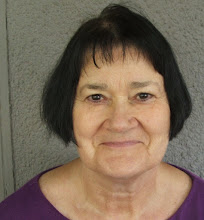
In early August, I attended the Willamette Writers Conference and pitched my novel, Fog of Dead Souls, to three agents. I'd chosen them because they represent authors writing thrillers and women's fiction and my book is a hybrid of both. If you've read this blog a while, you know that two years ago at the conference, I pitched my first novel and got very discouraged as I was chided by two of the three agents for not writing to genre (my women's fiction novel has a male protagonist). I didn't know enough at the time to just think that these were not the right agents for my book. I took it all too personally.
This time I went in with different expectations. I was well prepared, had written a great pitch, which I practiced and practiced and practiced. And I approached the agents not with hat in hand but looking for a champion. I actually said that to them: I'm looking for someone to champion this great book and I'm wondering if that's you.
Two were enthusiastic about the story; all three wanted pages. I worked on the manuscript another two weeks, incorporating changes from a police expert, and sent it off Aug 22. On Aug 29 Andrea Somberg, the most enthusiastic of the agents and who had asked for 50 pages, asked for the rest of the manuscript. On Sept 1, I got an email telling me she loved it and wanted to talk. Last Friday we started the agent/client conversation, Sunday I said yes, and now the ball is rolling.
I was high as a kite on the good news for days. Now I'm settling in to understand the contract and today I'm working with the revisions she wants (minor and not deal breakers). She's also reading my memoir and novel #1 and I'm thrilled to see what can happen next.
Friday, September 9, 2011


Monday, September 5, 2011
Writer's block vs. writer's blank
I've been thinking this weekend about why I don't plunge back into the new novel. Do I have writer's block? Do I have writer's blank? What's the difference?
I suffer very little from writer's block, which I define as a psychological state of discouragement, boredom, or restlessness. I suffer very little from this perhaps because I keep a variety of projects going. I enjoy writing short fictional prompts and anything can serve as a prompt; a line of poetry, a physical object, a phrase overheard in conversation, a band name on a poster on a telephone pole. I enjoy writing poetry and keep a running list of poetry subjects. And I can always read about writing. I count that as writing work because it not only keeps me informed but usually energizes me to try out some new ideas of my own.
Writer's blank on the other hand is when we don't know where to take the piece next. And I think that's what's happened to me on the current project. My practice is to always leave an obvious next step in my writing so that when I sit down to work on it, I can move right in. Sometimes that's an unfinished scene, sometimes it's a list of revisions or expansions to work on, sometimes it's a kernel of an idea for what is next.
Unfortunately, this isn't what happened the last time I was on writing retreat. I finished the chapters I had in mind and I had one day of retreat left. Knowing I was coming home to a full-tilt work week, I took that last day off and didn't make any notes to myself or leave myself any ideas. So I'm stuck in writer's blank and will need to remedy that with a list of possible new chapters, some verbal character sketches, maybe some discussion with a trusted writing colleague. And I'll start with reading what I have written.
I suffer very little from writer's block, which I define as a psychological state of discouragement, boredom, or restlessness. I suffer very little from this perhaps because I keep a variety of projects going. I enjoy writing short fictional prompts and anything can serve as a prompt; a line of poetry, a physical object, a phrase overheard in conversation, a band name on a poster on a telephone pole. I enjoy writing poetry and keep a running list of poetry subjects. And I can always read about writing. I count that as writing work because it not only keeps me informed but usually energizes me to try out some new ideas of my own.
Writer's blank on the other hand is when we don't know where to take the piece next. And I think that's what's happened to me on the current project. My practice is to always leave an obvious next step in my writing so that when I sit down to work on it, I can move right in. Sometimes that's an unfinished scene, sometimes it's a list of revisions or expansions to work on, sometimes it's a kernel of an idea for what is next.
Unfortunately, this isn't what happened the last time I was on writing retreat. I finished the chapters I had in mind and I had one day of retreat left. Knowing I was coming home to a full-tilt work week, I took that last day off and didn't make any notes to myself or leave myself any ideas. So I'm stuck in writer's blank and will need to remedy that with a list of possible new chapters, some verbal character sketches, maybe some discussion with a trusted writing colleague. And I'll start with reading what I have written.
Friday, September 2, 2011
Adventure versus experience
I'm editing a very long novel for a novice writer. He's had a most interesting life and has written a novel about it. Unfortunately, an interesting life with interesting experiences doesn't necessarily make for good fiction. Like many people, he's probably heard quite a few times that his stories are fascinating and they'd make a good book. The first is true, the second is not. Why? Because there's a difference between experience and adventure, a difference between interesting and dramatic.
It is possible to make a great novel out of an interesting life. You go deep into characters, you create conflict and tension, you have a protagonist who is desperate for something and willing to spend his life, or a portion of it, trying to get it. But just writing your own life with someone else's name on it isn't enough.
My client doesn't have big aspirations for his book. I think he wants to have recorded his experiences and it was probably a lot more fun to do so with fictional characters than himself. While I learned a lot writing my memoir, I have had way more fun writing fiction. So I don't blame him.
I'm polishing his writing to be more readable and he's pleased with the result. He can self-publish some copies that may be of interest to others who shared his experiences. And it's a very worthwhile creative endeavor. There's a place for that kind of writing in our world and I applaud his intentions.
It is possible to make a great novel out of an interesting life. You go deep into characters, you create conflict and tension, you have a protagonist who is desperate for something and willing to spend his life, or a portion of it, trying to get it. But just writing your own life with someone else's name on it isn't enough.
My client doesn't have big aspirations for his book. I think he wants to have recorded his experiences and it was probably a lot more fun to do so with fictional characters than himself. While I learned a lot writing my memoir, I have had way more fun writing fiction. So I don't blame him.
I'm polishing his writing to be more readable and he's pleased with the result. He can self-publish some copies that may be of interest to others who shared his experiences. And it's a very worthwhile creative endeavor. There's a place for that kind of writing in our world and I applaud his intentions.
Sunday, August 28, 2011
Am I a poet?
I spent Writing Friday this week reading and thinking about poetry. It's been on my list of creative things to do but I also knew that it was avoidance of the new novel. I haven't worked at all on the Frankie story since I came back from the July 4 writing retreat. And when I get away from a project too long, I get cold feet. Or maybe it's just a loss of momentum, like how hard it is to go back to the gym when you've been off sick for a week.
But I enjoyed reading the poems I had written in my 100 poem challenge and I spent time dividing them into the best, workable, and way too personal. Then I started to work my way through the maze of the Poet's Market, a giant compendium of journals and magazines that publish poems, contests that take manuscripts and collections, and publishers of collections. It was overwhelming and I realized that I am way too early in my life as a poet to do much marketing yet. That I need to write more, read more, and hone my craft. And that's okay.
I'm looking for another 100 project and poems might just be it.
But I enjoyed reading the poems I had written in my 100 poem challenge and I spent time dividing them into the best, workable, and way too personal. Then I started to work my way through the maze of the Poet's Market, a giant compendium of journals and magazines that publish poems, contests that take manuscripts and collections, and publishers of collections. It was overwhelming and I realized that I am way too early in my life as a poet to do much marketing yet. That I need to write more, read more, and hone my craft. And that's okay.
I'm looking for another 100 project and poems might just be it.
Tuesday, August 23, 2011
Making commitments, living into your integrity
My brother-in-law, David Cobb (http://www.dmcobbphoto.com/), stopped by today to see the pastel painting I had done of one of his photographs. You may remember that on my list of 50 creative projects was a fairly easy one: asking David for some of his landscapes to paint from. He promptly emailed me four lovely ones and so when I went to the last painting class of the term, I took along a goregous photo of the Badlands and their painted hills at dawn.
After we talked about that photo, I showed him some of the other pastels I've done this summer and some of the acrylics, and he asked me how I found the time for it. He knows I lead a pretty busy life and I still work close to full time.
"I make commitments," I said. And because it's really important to me to keep my word, I figure out a way to write and paint and do the things I say I want to do. In Diane DeMarco-Barrett's fun book, Pen on Fire, she encourages busy women to steal moments for writing. That wouldn't satisfy me--I want more time than that. So I make a commitment, like 100 poems or 100 prompts or completing my novel by Aug 1, and I announce that commitment to my creative community, and I make it happen. It's not always easy and in the spirit of William Stafford, I often have to "lower my standards."
But I know only too well that whatever we have on our agendas will fill up the day and so putting my creative desires on that agenda is really important to me.
After we talked about that photo, I showed him some of the other pastels I've done this summer and some of the acrylics, and he asked me how I found the time for it. He knows I lead a pretty busy life and I still work close to full time.
"I make commitments," I said. And because it's really important to me to keep my word, I figure out a way to write and paint and do the things I say I want to do. In Diane DeMarco-Barrett's fun book, Pen on Fire, she encourages busy women to steal moments for writing. That wouldn't satisfy me--I want more time than that. So I make a commitment, like 100 poems or 100 prompts or completing my novel by Aug 1, and I announce that commitment to my creative community, and I make it happen. It's not always easy and in the spirit of William Stafford, I often have to "lower my standards."
But I know only too well that whatever we have on our agendas will fill up the day and so putting my creative desires on that agenda is really important to me.
Friday, August 19, 2011
Getting the meaning of denouement
Denouement is the French word for the final scenes of a play or novel. In English, we call it the climax, I think, because we're keen on the giant cymbal crashing of the final events. But denouement comes from the verb that means to unknot or untie, and it focuses on resolving all the unexplained mysteries. And that's what I've been working on the last two Writing Fridays for my novel, Fog of Dead Souls. How did the killer have the deadman's sperm? How did he track the college professor? How did the detective follow her?
My experienced mystery writing reader also had questions about loose ends and had said that the final scene was unsatisfying so I've spent today rewriting it and really coming to understand my killer in a way I hadn't before. It was fun writing and fun thinking. When Ed first suggested I delve into his motivation, I balked. I hadn't wanted to go to that dark place (as I imagined it to be). But like so many things in writing, it turned out not to be that way at all. And I grew to like the killer for his honesty and wit.
I also wrote a synopsis today and that was helpful for seeing all the parts of the plot and I think it was a good preparation for rewriting the ending. Though when you're writing a novel that runs two parallel stories in different time frames, it's a big tricky. I'm getting these last pieces in order so I can send off the requested pages to the agents I met two weeks ago. As I worked on the synopsis, I could see other places where I might take the story deeper, but I think I'll see what these agents have to say before I work on it any further.
My experienced mystery writing reader also had questions about loose ends and had said that the final scene was unsatisfying so I've spent today rewriting it and really coming to understand my killer in a way I hadn't before. It was fun writing and fun thinking. When Ed first suggested I delve into his motivation, I balked. I hadn't wanted to go to that dark place (as I imagined it to be). But like so many things in writing, it turned out not to be that way at all. And I grew to like the killer for his honesty and wit.
I also wrote a synopsis today and that was helpful for seeing all the parts of the plot and I think it was a good preparation for rewriting the ending. Though when you're writing a novel that runs two parallel stories in different time frames, it's a big tricky. I'm getting these last pieces in order so I can send off the requested pages to the agents I met two weeks ago. As I worked on the synopsis, I could see other places where I might take the story deeper, but I think I'll see what these agents have to say before I work on it any further.
Tuesday, August 16, 2011
A big list that was fun to make
If you've read my blog for any length of time, you know I like lists. So when a member of my creativity group, the Monday Muses, sent around her list of ways to rejuvenate her art life, I decided to take on the challenge myself and come up with 50 possible things I could do that would be fun. Here's my list. Anybody want to take on the challenge?
July 29, 2011
1. Do a study of Van Gogh works with the books I have
2. Read in all the writing books I have and discard those that aren’t useful.
3. Write another 100 poems
4. Pick 10 prompts already written and write a short story for each one.
5. Choose one of my drawing exercise books and do the exercises.
6. Draw 15 minutes a day for 100 days.
7. Have a portfolio sale of my art.
8. Work on the third novel.
9. Create a chapbook from the first 100 poems.
10. Do a workshop with Jeanne Carbonetti
11. Enter 10 poetry contests
12. Read and learn about the poetry market
13. Read and learn about the short story market
14. Use some of my less successful pastels in collages
15. Commit to 4 pastels a month or 4 acrylics
16. Learn the color wheel and color theory
17. Read Van Gogh’s letters
18. Read Robert Henri.
19. Send another 20 pitches for novel #1
20. Do a pastel of the fence for the cover of novel #1
21. Collage with the photos of my own art work that Dave did
22. Assemble my easel horse.
23. Read and do the Poet’s Portable Workshop
24. Read Poemcrazy and other books on poetry that I own
25. Read and do Drawing with Children
26. Read and do Drawing on the Artist within
27. Listen to music and paint from within me
28. Work through Maisel’s Book of Creativity
29. Write a creativity manifesto
30. Do 10 artist dates a la Julia Cameron
31. Do the Artist’s Way again, perhaps in a group
32. Make a set of creative soul collages
33. Write a group (a book?) of prayers and meditations for creatives
34. Draw or paint from photos in my family albums
35. Commit to a 90-day creativity program and blog about it every day for the 90 days.
36. Do a study of style using Tufte’s book and Perrine’s book
37. Schedule time for dreaming and doodling a couple of times a week.
38. Schedule a lot of art play dates.
39. Read the Vocabula website 1-2 times a week for a set period of time
40. Listen to music and look at art in my books
41. Learn to use my digital camera well and easily, both shooting and uploading
42. Learn to print and manipulate photos on my printer
43. Ask David for some landscape photos for Christmas to paint from
44. Practice enough to get over my fears about drawing figures and faces.
45. Fool around with water colors
46. Take a poetry workshop
47. Take a short story workshop
48. Develop a comfortable confidence with line
49. Ask Ingrid about getting the Charles Belle book for me
50. Read through my blog posts to see if there’s a book in there
Subscribe to:
Posts (Atom)