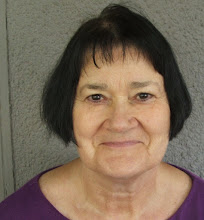
I submitted a book review for the Oregon Writers Colony newsletter today and thought I'd share it with you.
Self-Editing for Fiction Writers: How to Edit Yourself into Print
By Renni Browne and Dave King (Second edition/soft cover, 280 pp., 2004, HarperCollins)
ISBN: 978-0-06-054569-7
Review by Jill Kelly, PhD
As a 15-year veteran of freelance editing and writing coaching, I’m always on the lookout for books that will help my clients both write better and self-edit better. Most of the people I work with aren’t wealthy and the services of a good editor aren’t cheap, so the more they can do themselves, the happier they are.
Browne and King’s Self-Editing for Fiction Writers is a book I consistently recommend. Here’s why:
• The writing is clear and helpful. It’s more like a conversation with knowledgeable friends on a subject you both love: good writing. There’s nothing didactic about it, none of that pompous “I know and you don’t” style that often appears in writing manuals, especially those by academics.
• The topics and examples are helpful for writers at all levels. Whether you’re working on the fourth book in a published series or figuring out how to self-edit for the first time, the ideas here can help you improve your writing. I learn something every time I read it.
• The book is thorough. It covers all the main skills of fiction writing and how to improve them. I especially like their chapters on interior monologue and using physical beats to distinguish speakers. When you combine that thoroughness with the thoughtful and provocative nature of the exercises and the extensive answers in the back, the book becomes a mini-course in good writing.
Self-Editing for Fiction Writers does assume a solid knowledge of basic grammar, parts of speech, and standard punctuation, so it will not cure your comma errors or dangling participles. But again the tone is kind and clear, and writing terms like dialog, analogy, point of view, etc. get explained in context. And while this book is aimed at fiction writers, much of the information and the exercises will prove useful to those writing prose poems, memoir, and non-fiction. So while it isn’t a substitute for hands-on work with a good developmental or text editor, it can take you a long way.
Monday, September 6, 2010


Friday, September 3, 2010
the point of a scene
I spent the day writing a transition chapter. I need to move my heroine from Pittsburgh to New Mexico but I decided she needs to stop and see her ex on the way. She hasn't quite hit bottom yet and I think he can be instrumental in getting her there. But I don't yet know how. That's the next chapter to write.
But this chapter of travel, of road trip, needs to have its purpose too. While there's the possibility of using an occasional brief scene or chapter for glue, just to paste some things together, I'd rather not do that. So when I sat down to write the road trip, I felt a little stymied. It wouldn't take many sentences to have her drive to from southern Pennsylvania to Houston. In fact, I accomplished most of that in about 6 sentences and still said something about her state of mind. But that wasn't enough.
So I thought about other things I could convey that would contribute to the plot or character development. Her distrust of men. Her fear of the killer. Her desire to stop being in fear. Her sorrow at leaving her best friend behind when that friend might also be a prey. Somehow I needed to convey all of this too. I wrote a draft of a chapter in which she thinks about some of these things but my challenge next time I write will be to see how I can create that through "show," not "tell." But at least I've identified what I want to communicate.
But this chapter of travel, of road trip, needs to have its purpose too. While there's the possibility of using an occasional brief scene or chapter for glue, just to paste some things together, I'd rather not do that. So when I sat down to write the road trip, I felt a little stymied. It wouldn't take many sentences to have her drive to from southern Pennsylvania to Houston. In fact, I accomplished most of that in about 6 sentences and still said something about her state of mind. But that wasn't enough.
So I thought about other things I could convey that would contribute to the plot or character development. Her distrust of men. Her fear of the killer. Her desire to stop being in fear. Her sorrow at leaving her best friend behind when that friend might also be a prey. Somehow I needed to convey all of this too. I wrote a draft of a chapter in which she thinks about some of these things but my challenge next time I write will be to see how I can create that through "show," not "tell." But at least I've identified what I want to communicate.
Wednesday, September 1, 2010
Pushing beyond what you know how to do
I'm getting ready to forward a difficult email to a friend who's a writer. I've many comments for his novel and I suspect he's not going to like what I have to say. In preparation, I was reading Leonard Bishop again: his brief commentary on "Completing Impossible Scenes." This little gem of advice is mislabeled for it's really about pushing ourselves as writers.
By the time most of us start writing, especially those of us who come to the craft at midlife or later, we have already absorbed many writing techniques through all the reading we've done. But that doesn't mean there isn't an infinite amount to learn ahead of us. Bishop enourages us to write the scenes we don't know how to write, to keep pushing the idea or the character or the plot deeper, further. Of course, we risk writing something that doesn't work, but all artists have to do that, create junk that teaches us something.
Too many writers, he says, get pretty good and then rearrange what they already know how to do. That's the place I think that my friend has fallen into. He knows how to write clever sentences, and introspective first-person narration, but he hasn't pushed the plot into an original place. I'm hoping I'll find the right words to encourage him to do so.
By the time most of us start writing, especially those of us who come to the craft at midlife or later, we have already absorbed many writing techniques through all the reading we've done. But that doesn't mean there isn't an infinite amount to learn ahead of us. Bishop enourages us to write the scenes we don't know how to write, to keep pushing the idea or the character or the plot deeper, further. Of course, we risk writing something that doesn't work, but all artists have to do that, create junk that teaches us something.
Too many writers, he says, get pretty good and then rearrange what they already know how to do. That's the place I think that my friend has fallen into. He knows how to write clever sentences, and introspective first-person narration, but he hasn't pushed the plot into an original place. I'm hoping I'll find the right words to encourage him to do so.
Sunday, August 29, 2010
Writing from limbo
On Friday, I wrote the final Pittsburgh chapter of the novel, which has two consecutive plots. I hadn't known it would be the last chapter. I was writing again from the imaginary seat of my pants and while I knew I was close to getting the protagonist out of town, it happened. It was good writing and a satisfying departure for her but now I'm a bit stymied.
Will Ellie go directly to New Mexico and encounter Al or will there be some adventures in-between? Will she hook up with Danny, an old boyfriend, in Houston? Will the killer be on her trail and will she have close calls? I don't know.
It's an opportunity for me to practice 16 solutions. What 16 things can happen to Ellie now that she's on the road?
I have a love-hate relationship with this kind of not knowing. I like ending a writing session with a clear idea of what to write next. It doesn't have to be the whole story splayed out in front of me but to know the next piece is comforting. But there's also some excitement in not knowing, in waiting for the muse to instruct me, the characters to speak to me.
I know that not everything is possible, that it isn't that wide open. I'm at 55,000 words and I've lots of loose ends in Story 2 to deal with so this part can't be more than 2-3 chapters. And those 55, 000 words and their events will circumscribe to some extent what's possible. But surely there's time for another big wrinkle in the adventure. I can't wait to find out.
Will Ellie go directly to New Mexico and encounter Al or will there be some adventures in-between? Will she hook up with Danny, an old boyfriend, in Houston? Will the killer be on her trail and will she have close calls? I don't know.
It's an opportunity for me to practice 16 solutions. What 16 things can happen to Ellie now that she's on the road?
I have a love-hate relationship with this kind of not knowing. I like ending a writing session with a clear idea of what to write next. It doesn't have to be the whole story splayed out in front of me but to know the next piece is comforting. But there's also some excitement in not knowing, in waiting for the muse to instruct me, the characters to speak to me.
I know that not everything is possible, that it isn't that wide open. I'm at 55,000 words and I've lots of loose ends in Story 2 to deal with so this part can't be more than 2-3 chapters. And those 55, 000 words and their events will circumscribe to some extent what's possible. But surely there's time for another big wrinkle in the adventure. I can't wait to find out.
Tuesday, August 24, 2010
More on dialog
Today I was editing a chapter in a non-fiction book on aging. The chapter, on family communication, included a lot of reported (also called indirect) speech. "The wife reported that she...., but the husband disagreed and said..." For an occasioanl sentence, this works okay but this paragraph reported a whole conversation between this couple and their adult children. I suggested to the author that she create a small scene and use actual dialog, even though she might have to recreate it.
In nonfiction, dialog can help the examples feel more like a story, feel more alive and realistic. And an author can use them to the same good effect that fiction writers do.
But be wary of dialog that is used for its own sake or just to break up the page. Dialog should be used for two things: to convey information through an individual's voice (case study, fictional character) and to acquire information (fictional character as tool of author or nonfiction author asking questions of her reader).
Readers love scenes. We are all so habituated by tv and the movies that we get most of our information that way. Use them to your advantage.
In nonfiction, dialog can help the examples feel more like a story, feel more alive and realistic. And an author can use them to the same good effect that fiction writers do.
But be wary of dialog that is used for its own sake or just to break up the page. Dialog should be used for two things: to convey information through an individual's voice (case study, fictional character) and to acquire information (fictional character as tool of author or nonfiction author asking questions of her reader).
Readers love scenes. We are all so habituated by tv and the movies that we get most of our information that way. Use them to your advantage.
Sunday, August 22, 2010
Three things to watch for in fiction
In his excellent book Dare to Be a Great Writer, Leonard Bishop lists three things that plague the writing of amateurs and which they are reluctant to let go of when they begin rewriting:
1. Dialog that tells content that should be delivered in a scene.
2. Scenes that are overlong and that belabor the point they deliver.
3. Overlong introspections that include polemics.
I'd add a fourth: long passages of indirect speech that should be dialog.
While some exceptionally skilled writers (Wendell Berry comes to mind) can handle long passages that don't include a specific scene of action, most less experienced writers cannot do that without bogging the reader down.
Case in point: I've been reading a manuscript written in first person. The narrator has much to say. Too much. He explains everything overmuch, he philosophizes over much. I'm on page 80 and I don't yet know what the story is about. The author is a good writer in that sentences are well put together, his images are often clever, and his vocabulary impressive. But none of that works without more scenes, more action, more interaction. The overlong introspections and arguments are weighing this reader down.
Whenever possible, create more scenes where more happens. Where the characters' dilemmas are evidenced, where characterizations are revealed (motives, in particular), where people show their feelings, their values, their vices.
1. Dialog that tells content that should be delivered in a scene.
2. Scenes that are overlong and that belabor the point they deliver.
3. Overlong introspections that include polemics.
I'd add a fourth: long passages of indirect speech that should be dialog.
While some exceptionally skilled writers (Wendell Berry comes to mind) can handle long passages that don't include a specific scene of action, most less experienced writers cannot do that without bogging the reader down.
Case in point: I've been reading a manuscript written in first person. The narrator has much to say. Too much. He explains everything overmuch, he philosophizes over much. I'm on page 80 and I don't yet know what the story is about. The author is a good writer in that sentences are well put together, his images are often clever, and his vocabulary impressive. But none of that works without more scenes, more action, more interaction. The overlong introspections and arguments are weighing this reader down.
Whenever possible, create more scenes where more happens. Where the characters' dilemmas are evidenced, where characterizations are revealed (motives, in particular), where people show their feelings, their values, their vices.
Friday, August 20, 2010
Practicing what I preach
Today was a Writing Friday gathering and I didn't feel much like writing. I've been in deep reflection since my last session with my therapist on Wednesday and didn't really feel like pulling out of that to plunge into my novel. In addition, I hadn't solved the issue for the novel that I'd been mulling over all week--how to reveal a key piece of information to my heroine and to the reader. I'd come up with two solutions but one was prosaic and the other one I couldn't quite make happen logistically. So I felt stuck and the muse wasn't giving me ideas and I didn't want to "waste my time" without the solution.
At the same time, I didn't want to wimp out. As a writing coach, I feel it important to set a good example and to practice what I preach. And I often preach the need to keep writing even when you don't know what you are doing. A huge part of the creative process is keeping on keeping on even when you don't know what comes next. Because in art-making, there are no mistakes, just experiments that do or don't work out.
So I went out to the terrace (it was a gorgeous day here in Portland--cool, sunny, 70s, and my terrace was just a heavenly place to be. I set up my laptop, and took the last three sentences from last Friday's writing as my prompt and just let my hands be guided. I kept coming back to trust, trusting the muse would show up, trusting my imagination would work and it did.
I discovered I needed to write another small section before I could reveal this part of the mystery and a great idea came up at the perfect moment. And I wrote that next chapter.
Then after lunch, I was about to move away from the computer, read a couple of articles I'd been meaning to get to, but then I thought, hey, it worked this morning. Go back to the story and see what come's next and I wrote another good chapter. Not as great, not as clear, but a good first draft. Very pleased tonight.
At the same time, I didn't want to wimp out. As a writing coach, I feel it important to set a good example and to practice what I preach. And I often preach the need to keep writing even when you don't know what you are doing. A huge part of the creative process is keeping on keeping on even when you don't know what comes next. Because in art-making, there are no mistakes, just experiments that do or don't work out.
So I went out to the terrace (it was a gorgeous day here in Portland--cool, sunny, 70s, and my terrace was just a heavenly place to be. I set up my laptop, and took the last three sentences from last Friday's writing as my prompt and just let my hands be guided. I kept coming back to trust, trusting the muse would show up, trusting my imagination would work and it did.
I discovered I needed to write another small section before I could reveal this part of the mystery and a great idea came up at the perfect moment. And I wrote that next chapter.
Then after lunch, I was about to move away from the computer, read a couple of articles I'd been meaning to get to, but then I thought, hey, it worked this morning. Go back to the story and see what come's next and I wrote another good chapter. Not as great, not as clear, but a good first draft. Very pleased tonight.
Subscribe to:
Posts (Atom)