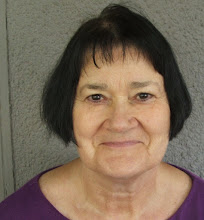
I got a nice phone call this afternoon from a woman who attended my workshop on Sunday who's interested in working with me. What most impressed her she said was my conversation about reader-focused writing.
For years in my professional and health professional writing classes (non-fiction), I've talked to students about writing for the reader. This goes beyond knowing who your target audience is. It means writing so that the reading experience is both communicative and seamless. First, communication. This means writing in a clear, clean way that presents the material in an easily digestible form. It means letting go of fancy styles and trying to impress the reader with your sophistication so that you can get the information across. Second, it means taking great pains with the conventions of grammar, punctuation, and formatting so that the reader is not caught up in noticing how poorly you've edited.
For fiction and memoir writers, the second rule applies in the same way. You want your grammar, punctuation, and formatting to be invisible, so clean and transparent (I'm tempted to say "normal" that the reader pays it no mind. In terms of content, you want your reader to be completely caught up in your story so that they forget they are reading and they are just experiencing. For that is why we read fiction and memoir: to experience what the author is writing. We want the act of reading to fall away and be transported. That's one definition of successful writing, I think: it's a form of transportation.
Thursday, August 12, 2010


Monday, August 9, 2010
Some thoughts on writing conferences
As writing conferences go, I'm a relative neophyte. I met people over the weekend who've been to 6 or 8 different ones in the region, people who flew from Florida and Maine to attend ours, people who've been to this one 8 years in a row. Dedication or insanity?
Some people like conferences. They like meeting new people, get a lot out of listening to others' ideas, feel stimulated by the crowds and hubbub. I, however, am not one of them. I'm a visual kinesthetic learner so listening to speaker after speaker isn't my best way to get ideas. I know that about myself so I only went to two workshops the whole weekend. Friday morning I listed to Hallie Ephron talk about what makes a good mystery novel. While I'm not writing a genre mystery at the moment, although my novel has a big mystery at its center so far, I love reading good mysteries and now I know a lot more about their structure and why I like the ones I like. Plus she recommended some of her favorites and they were writers I'd never heard of.
Yesterday, I listened to Larry Brooks talk about characterization and breaking successful characters done into their parts was really helpful for me and a good exercise in the left brain/right brain combination that goes on in fiction writing.
Two speakers 48 hours apart was perfect. Time to think about what they said, apply it to my own book, and not be overloaded.
The manuscript consults went well. It surprised me to learn that most of my consults were paying to have two or three of us read the manuscript and compare notes. The best conversation I had was the one on Friday. I felt like the author and I partnered to discuss her book. The others listened to what I had to say, agreed or disagreed, but in three cases, they had already completely reworked the pages they'd sent me so it all seemed superfluous.
I was flattered though to hear one fellow say that he had tried to get a critique with me last year and my slots were all full. He had a copy of my memoir. Nice. Another fellow approached me Friday as I was sitting at the book signing table and asked if I had a workshop. Yes, on Sunday, I said. He wasn't coming that day but he had loved my workshop from the year before. Nice.
My workshop went great. It was in the last session of the day slot and I thought there'd be no one, but 35 people showed up, laughed when I was funny, asked great questions, and the time zoomed by. I came home quite contented.
Some people like conferences. They like meeting new people, get a lot out of listening to others' ideas, feel stimulated by the crowds and hubbub. I, however, am not one of them. I'm a visual kinesthetic learner so listening to speaker after speaker isn't my best way to get ideas. I know that about myself so I only went to two workshops the whole weekend. Friday morning I listed to Hallie Ephron talk about what makes a good mystery novel. While I'm not writing a genre mystery at the moment, although my novel has a big mystery at its center so far, I love reading good mysteries and now I know a lot more about their structure and why I like the ones I like. Plus she recommended some of her favorites and they were writers I'd never heard of.
Yesterday, I listened to Larry Brooks talk about characterization and breaking successful characters done into their parts was really helpful for me and a good exercise in the left brain/right brain combination that goes on in fiction writing.
Two speakers 48 hours apart was perfect. Time to think about what they said, apply it to my own book, and not be overloaded.
The manuscript consults went well. It surprised me to learn that most of my consults were paying to have two or three of us read the manuscript and compare notes. The best conversation I had was the one on Friday. I felt like the author and I partnered to discuss her book. The others listened to what I had to say, agreed or disagreed, but in three cases, they had already completely reworked the pages they'd sent me so it all seemed superfluous.
I was flattered though to hear one fellow say that he had tried to get a critique with me last year and my slots were all full. He had a copy of my memoir. Nice. Another fellow approached me Friday as I was sitting at the book signing table and asked if I had a workshop. Yes, on Sunday, I said. He wasn't coming that day but he had loved my workshop from the year before. Nice.
My workshop went great. It was in the last session of the day slot and I thought there'd be no one, but 35 people showed up, laughed when I was funny, asked great questions, and the time zoomed by. I came home quite contented.
Saturday, August 7, 2010
A conference of introverts
I showed up early yesterday at the Willamette Writers Conference. I needed to drop off my books to sell at the Barnes & Noble table and pick up my registration materials. And I knew parking would be difficult. It was but after driving around a bit, I found a spot and got everything else taken care of in about 5 minutes. I wasn't hungry so standing in line for bagels and unripe fruit wasn't very appealing so I wandered around reminding myself of the layout of the hotel (pretty simple really) and then sat in various places and tried to strike up conversations with other attendees.
That was almost as frustrating as looking for a place to park. While people weren't rude (they were willing to give me monosyllabic answers to my questions for "Nice cool morning, isn't it?" and "Is this your first conference?"), nobody would engage and I realized it was a conference for extroverts. There's a reason we're writers and not performers, novelists instead of dancers, poets instead of pianists. We live mostly in our heards and we like it that way.
Eventually I gave up and took my tea over to a round table in the lobby and sat down and spent the next half hour thinking about my novel and some of the "what if" possibilities for further plot complications. It was a satisfying half-hour of thinking and note-taking in the spirit of Writing Friday and I felt reconnected to my book and connected to fellow writers in a way that I couldn't seem to do conversationally. I also felt proud of myself for making an effort, even if it came to very little.
That was almost as frustrating as looking for a place to park. While people weren't rude (they were willing to give me monosyllabic answers to my questions for "Nice cool morning, isn't it?" and "Is this your first conference?"), nobody would engage and I realized it was a conference for extroverts. There's a reason we're writers and not performers, novelists instead of dancers, poets instead of pianists. We live mostly in our heards and we like it that way.
Eventually I gave up and took my tea over to a round table in the lobby and sat down and spent the next half hour thinking about my novel and some of the "what if" possibilities for further plot complications. It was a satisfying half-hour of thinking and note-taking in the spirit of Writing Friday and I felt reconnected to my book and connected to fellow writers in a way that I couldn't seem to do conversationally. I also felt proud of myself for making an effort, even if it came to very little.
Wednesday, August 4, 2010
Writing when you aren't a writer
This weekend is the Willamette Writers Conference and I'm going for the second time. Last year I was very nervous because I was pitching my first novel (totally unsuccessfully) and this year I'm not. I'm doing some other things, giving a workshop on Sunday afternoon, doing a booksigning on Friday morning, and I'm meeting with six would-be authors about their manuscripts.
For a fee, writers can send in 20 pages of their book and a synopsis and get an editor like me to read for them. Each year it has sounded like a good idea until I actually sit down to read them. This year, only one of them is quite terrific. It needs work but the reader is clever, articulate, thoughtful, and prepared. The other five are not. In several cases, I suspect the author had heard enough times "what a great story--you ought to write a book" that he and she decided to do so.
I hear this quite often. I'm-literate (can read and write) therefore I can write a book that surely somone will want to publish. On the one hand, this is an unfortunate syndrome as the products are typically marginal at best. On the other hand, the time put in has kept the person out of some other kind of trouble, including plain boredom. What they have not considered is the training that it takes to be a writer: the years of reading and writing and often classes that are required to learn the craft and distinguish oneself in it.
Do these manuscripts have potential? Yes, probably. Will their writers be willing to do what it takes to develop it? Maybe in two cases. The others I suspect will be disheartened, though that won't be my intention, or unbelieving, as surely their non-writer friends will have loved it. What else of course can you say to your spouse or friend or lover who has put in months and years on a project? How can you tell the truth?
Well, that falls to me this Sunday. Wish me patience and kindness in my voice.
For a fee, writers can send in 20 pages of their book and a synopsis and get an editor like me to read for them. Each year it has sounded like a good idea until I actually sit down to read them. This year, only one of them is quite terrific. It needs work but the reader is clever, articulate, thoughtful, and prepared. The other five are not. In several cases, I suspect the author had heard enough times "what a great story--you ought to write a book" that he and she decided to do so.
I hear this quite often. I'm-literate (can read and write) therefore I can write a book that surely somone will want to publish. On the one hand, this is an unfortunate syndrome as the products are typically marginal at best. On the other hand, the time put in has kept the person out of some other kind of trouble, including plain boredom. What they have not considered is the training that it takes to be a writer: the years of reading and writing and often classes that are required to learn the craft and distinguish oneself in it.
Do these manuscripts have potential? Yes, probably. Will their writers be willing to do what it takes to develop it? Maybe in two cases. The others I suspect will be disheartened, though that won't be my intention, or unbelieving, as surely their non-writer friends will have loved it. What else of course can you say to your spouse or friend or lover who has put in months and years on a project? How can you tell the truth?
Well, that falls to me this Sunday. Wish me patience and kindness in my voice.
Sunday, August 1, 2010
Don't jump ship
The last few Sundays in his newsletter, my teacher Eric Maisel has been talking about writing a novel and the various speed bumps people hit. We hit snags when it isn't going well, or we think it isn't going well, or we don't know what to write next.
Some of us, I think, are tempted at that point to go back to the beginning and start editing. I don't mean solving structural problems that might lead to a next episode but rather refinements in wording and punctuating, the kind of work that isn't about drafting new material.
Today, Maisel admonished us to "get in the habit of completing work. If you always stop at some point short of finishing because you feel that your current novel isn’t working, that may constitute your way of not completing things. Try to finish drafts, even if you have your doubts, rather than always abandoning a draft part of the way in."
I have found myself several times in the last weeks at one of those junctures--unsure where to go next in the plot, unsure how much to reveal. So his advice is timely for me, to keep drafting right or wrong. It isn't carved in stone, what I write; these aren't irrevocable decisions, even murdering one of the characters. I can always change my mind.
So this week I'm plunging forward no matter what.
Some of us, I think, are tempted at that point to go back to the beginning and start editing. I don't mean solving structural problems that might lead to a next episode but rather refinements in wording and punctuating, the kind of work that isn't about drafting new material.
Today, Maisel admonished us to "get in the habit of completing work. If you always stop at some point short of finishing because you feel that your current novel isn’t working, that may constitute your way of not completing things. Try to finish drafts, even if you have your doubts, rather than always abandoning a draft part of the way in."
I have found myself several times in the last weeks at one of those junctures--unsure where to go next in the plot, unsure how much to reveal. So his advice is timely for me, to keep drafting right or wrong. It isn't carved in stone, what I write; these aren't irrevocable decisions, even murdering one of the characters. I can always change my mind.
So this week I'm plunging forward no matter what.
Friday, July 30, 2010
Confessing to murder
I did two things today that were out of character for me.
First, I worked on my novel all day when I should have been working for pay (I have a fair number of editing projects stacked up with short timeframes). I'm usually a very good girl but today I just needed to play hookey. I wrote for four hours, wrote three chapters, and it just flowed like water. What a treat!
The second thing I did was kill off a major character. There's been death already in this book but it came unexpectedly, almost as if I had nothing to do with it--I just wrote it down. But this murder was carefully planned and executed. And it was grizzly and shocking to the listeners in the closing circle at Writing Friday. But it had to be done.
Of course, the nice thing about fiction is I can undo it if the story needs it to be otherwise. A very satisfying writing day, all told.
First, I worked on my novel all day when I should have been working for pay (I have a fair number of editing projects stacked up with short timeframes). I'm usually a very good girl but today I just needed to play hookey. I wrote for four hours, wrote three chapters, and it just flowed like water. What a treat!
The second thing I did was kill off a major character. There's been death already in this book but it came unexpectedly, almost as if I had nothing to do with it--I just wrote it down. But this murder was carefully planned and executed. And it was grizzly and shocking to the listeners in the closing circle at Writing Friday. But it had to be done.
Of course, the nice thing about fiction is I can undo it if the story needs it to be otherwise. A very satisfying writing day, all told.
Wednesday, July 28, 2010
Other ways of working on a book
At Writing Friday last week, I made a commitment to do two sessions of writing on my novel before the next Friday. Today is Wednesday, it's nearly noon, and I haven't done anything. Well, maybe that's not true. I haven't done any physical writing. I'm deep in several editing projects that are requiring a lot of computer time. So maybe more computer time just isn't it this week.
So instead, I've been working on the novel while I do the treadmill at the gym. I'm playing out scenarios, asking myself some good questions, imagining scenes.
Then I come home and take notes, write down the questions and some possible answers, explore possibilities.
I'm declaring myself fulfilled on my commitment!
So instead, I've been working on the novel while I do the treadmill at the gym. I'm playing out scenarios, asking myself some good questions, imagining scenes.
Then I come home and take notes, write down the questions and some possible answers, explore possibilities.
I'm declaring myself fulfilled on my commitment!
Subscribe to:
Posts (Atom)